Research
My research seeks to understand how and why the global methane cycle is changing by integrating atmospheric observations, stable isotopes, satellite remote sensing, atmospheric inverse modeling, process-based models, and artificial intelligence.
I develop observation-driven and scientifically interpretable approaches that connect methane processes across scales—from microbial activity in soils and wetlands to regional emissions and global atmospheric change.
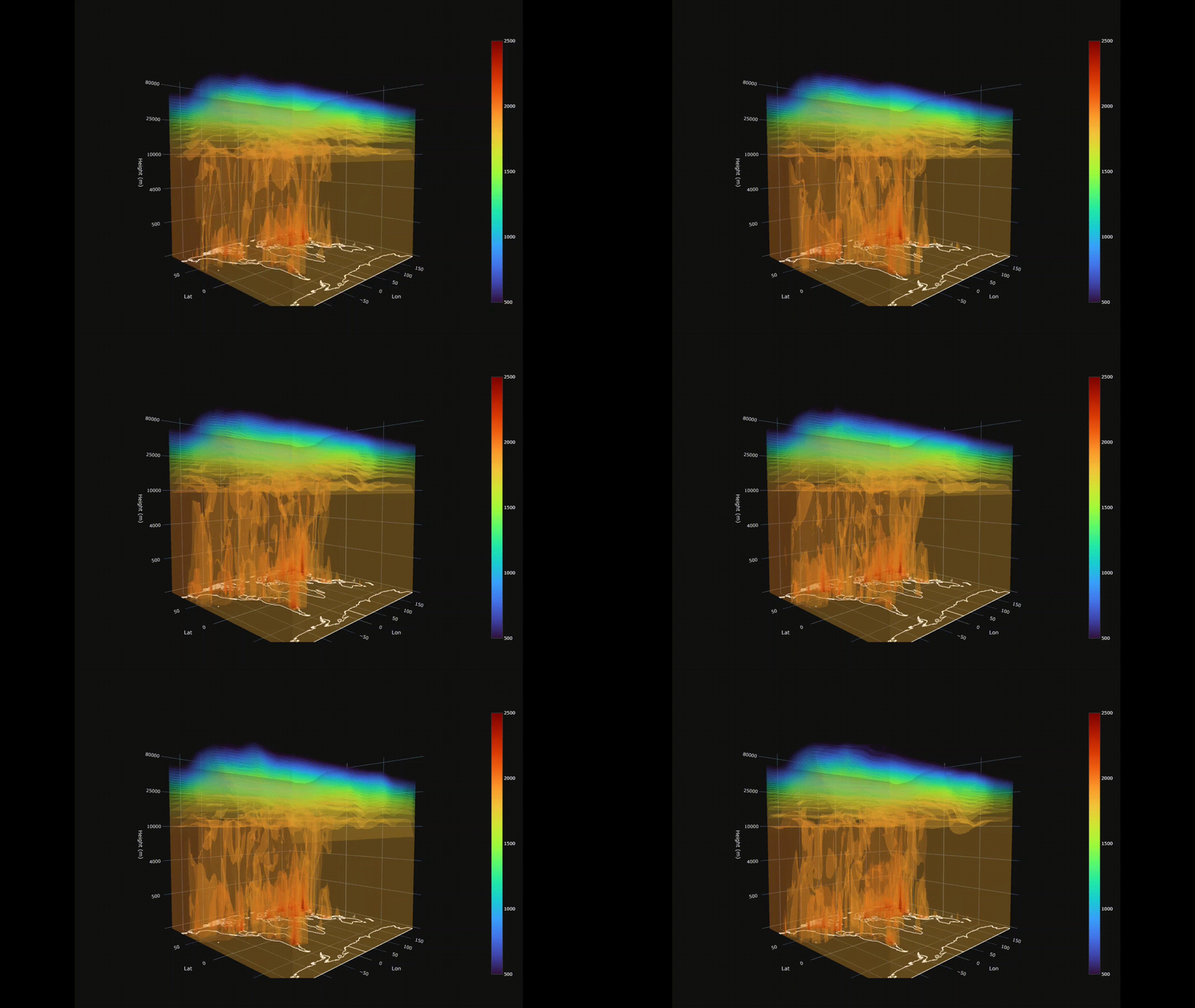
CarbonTracker-CH₄ and the Global Methane Budget
I co-lead the continued development and application of CarbonTracker-CH₄ , NOAA’s global atmospheric methane data assimilation system. CarbonTracker-CH₄ combines atmospheric observations, prior emission estimates, and atmospheric chemistry and transport modeling to quantify methane sources and sinks across the globe.
My work focuses on identifying the processes responsible for recent atmospheric methane growth from 2000 to present, improving microbial and fossil-fuel source attribution using isotopes, and evaluating how uncertainties in atmospheric chemistry and soil methane uptake influence inferred emissions.
Our Recent Publication on CarbonTracker-CH₄ · Impact of Soil Sink on CarbonTracker-CH₄
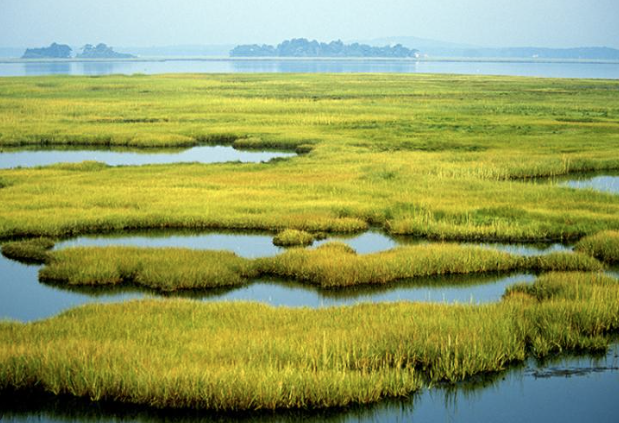
Natural Methane Sources and Sinks
Natural methane sources and sinks remain among the largest uncertainties in the global methane budget. My research examines the spatial and temporal dynamics of wetland methane emissions and soil methane uptake, with a focus on the microbial processes and environmental feedbacks that regulate these fluxes.
I combine field observations, remote sensing, process-based models, machine learning, and atmospheric inversions to reconcile bottom-up and top-down estimates and identify the environmental controls governing methane production, oxidation, transport, and exchange to the atmosphere.
Arctic methane feedbacks · Forest methane soil sinks · Soil Sinks in Greenland
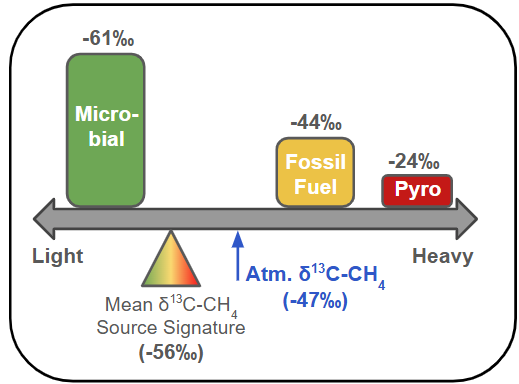
Stable Isotopes and Methane Source and Sink Attribution
Stable isotopes provide critical information for distinguishing methane sources and sinks that cannot be separated using methane concentrations alone. I incorporate atmospheric δ¹³C-CH₄ observations—and increasingly δD-CH₄—into global inverse modeling frameworks.
This multi-tracer approach helps distinguish microbial, fossil-fuel, biomass-burning, and sink-related contributions to atmospheric methane change while reducing uncertainties in global source and sink attribution.
Methane isotope source attribution · Review on isotopes of greenhouse gases
AI4Methane and Knowledge-Guided Machine Learning
I founded and co-lead AI4Methane , an international research community connecting atmospheric scientists, ecologists, Earth system modelers, and computer scientists to advance artificial intelligence for both natural and anthropogenic methane research.
Our AI research combines scientific knowledge with machine learning through hybrid modeling, physical constraints, uncertainty-aware prediction, interpretable model design, and benchmark datasets for methane science.
Rather than replacing process-based models, I incorporate process-based knowledge into machine learning to improve spatial representation, identify missing processes, characterize model uncertainty, and support robust prediction under sparse observational coverage.
Knowledge-guided wetland methane modeling · AI-ready natural methane dataset · AI-based upscaling of wetland methane
Satellite Observations and Multi-Scale Integration
Satellite methane observations provide broad spatial coverage, while surface networks, aircraft measurements, and atmospheric profiles offer high-accuracy constraints. My work integrates these complementary observing systems within atmospheric inversion frameworks.
A central goal is to bridge scale mismatches among field measurements, satellite retrievals, ecosystem models, and global inversions while accounting for sampling, atmospheric transport, retrieval, and representation uncertainties.
This research supports improved regional methane estimates, independent model evaluation, and the development of higher-resolution decision-support bottom-up and top-down products.
Satellite methane observation comparison · Satellite and multi-tracer integration